
SEO for Service-Based Businesses in the Philippines: A Practical Guide
If you run a service-based business in the Philippines, having a great service isn’t always enough. Your potential customers also need to be able to find you when they’re searching online.
Think about how people look for services today.
Someone might search Google for a dentist in their area, an aesthetic clinic nearby, a contractor for a specific project, or a professional who can help solve a business problem.
In many cases, the businesses that appear during that search become part of the customer’s consideration—even before an inquiry is made.
That’s where SEO for service-based businesses comes in.
Search engine optimization (SEO) can help your business become more visible when potential customers search for the services, solutions, and information you provide.
But good SEO isn’t simply about getting more website traffic or trying to rank #1 for every possible keyword.
For a service-based business, the goal is much more practical:
Be visible for the right searches, attract the right people, build trust, and create more opportunities for qualified inquiries.
In this guide, I’ll explain how SEO works for service-based businesses in the Philippines, the areas worth focusing on, common mistakes to avoid, and what you can realistically expect from an SEO strategy.
What Is SEO for Service-Based Businesses?
SEO, or search engine optimization, is the process of improving your online presence so that search engines can better understand your business and potential customers can find you through relevant searches.
For service businesses, these searches might look like:
- “dentist in Davao City”
- “aesthetic clinic near me”
- “aircon cleaning Davao”
- “real estate agent in Davao City”
- “SEO specialist Philippines”
What makes these searches important is intent.
The person searching may already have a problem they need to solve. They may be researching their options, comparing providers, or looking for someone to contact.
SEO helps connect those searches with the most relevant pages on your website.
That means your SEO strategy shouldn’t begin with:
“What keywords can I rank for?”
A better question is:
“What are my ideal customers searching for, and do I have the right content to help them?”
Why Does SEO Matter for Service-Based Businesses?
Many Filipino service-based businesses rely heavily on Facebook, referrals, repeat customers, paid advertising, or a combination of these channels.
There’s nothing inherently wrong with that.
But Google serves a different purpose.
Social media can help people discover you while they’re scrolling. Search engines can help you appear when someone is actively looking for information, a solution, or a service.
For example, a potential customer who searches:
“dental clinic in Davao City”
is behaving differently from someone who happens to see a dental clinic’s post on their Facebook feed.
The searcher has expressed a specific need.
A strong SEO presence can help your business:
- Become easier to discover through relevant Google searches
- Reach potential customers who are actively researching your services
- Build credibility before someone contacts you
- Answer common questions during the customer’s decision-making process
- Improve visibility within the locations you actually serve
- Create another sustainable source of potential inquiries
SEO shouldn’t be viewed as an instant lead-generation trick.
It’s better understood as a long-term investment in making your business easier to find when the right people are searching.
How Does SEO Work for a Service-Based Business?
SEO isn’t one activity.
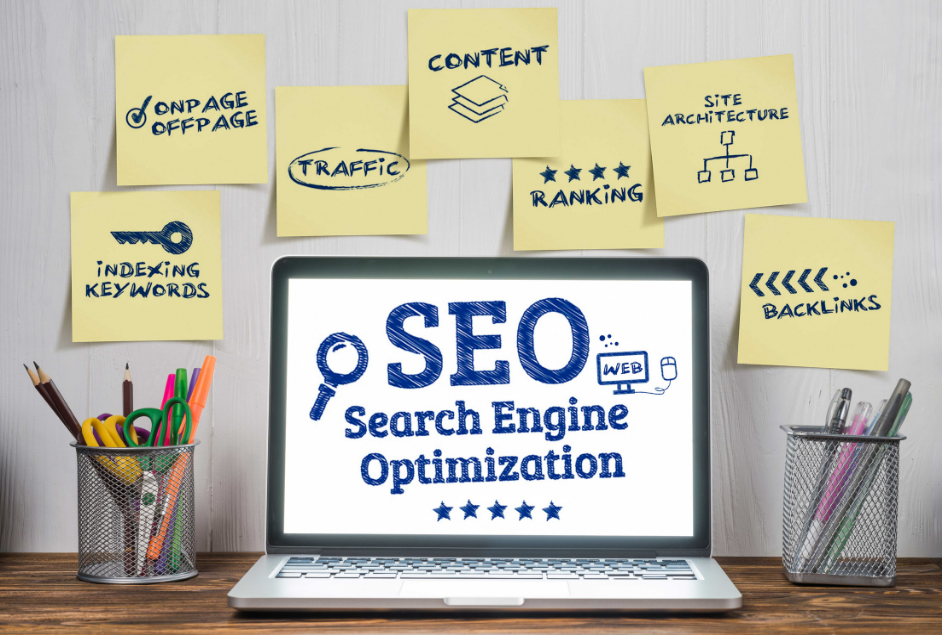
A strong strategy usually involves several areas working together.
For most service-based businesses, these are some of the most important.
1. Search Intent and Keyword Research
Keyword research is an important part of SEO, but search volume alone shouldn’t determine your strategy.
You also need to understand why someone is searching.
Consider these examples:
“What is local SEO?”
This person is primarily looking for information.
Now compare that with:
“SEO specialist in Davao City”
This search may indicate that someone is looking for or evaluating a provider.
And:
“local SEO services Philippines”
may indicate stronger commercial intent.
All three searches are related to SEO, but the searcher expects something different from each result.
That’s why I don’t recommend trying to make one page rank for every keyword related to your business.
Instead, each important page should have a clear purpose and satisfy a particular type of search intent.
2. On-Page SEO
On-page SEO involves optimizing individual pages so visitors and search engines can clearly understand what those pages are about.
This can include:
- SEO titles
- Meta descriptions
- Headings
- Page content
- URLs
- Images and alternative text
- Internal links
- Service information
But optimization doesn’t mean repeating the same keyword over and over again.
If a sentence sounds unnatural because you’re trying to insert a keyword, it probably isn’t helping the reader.
A strong service page should clearly communicate:
What do you offer?
Who is the service for?
What problem does it help solve?
Where do you provide the service, when location matters?
What should someone do if they’re interested?
SEO should make this information clearer—not harder to read.
3. Local SEO
If your business serves customers within a specific city or service area, local SEO can be particularly important.
Local SEO focuses on helping a business improve its visibility for searches where location matters.
For example, someone in Davao City might search for:
- “dentist Davao City”
- “skin clinic Davao”
- “salon near me”
- “contractor Davao City”
Google may show traditional organic results alongside local results associated with Google Business Profiles and Maps.
Local SEO can involve:
- Optimizing your Google Business Profile
- Keeping your business name, address, phone number, and other information accurate
- Creating useful service and location content
- Earning genuine customer reviews
- Managing relevant local citations
- Strengthening the local relevance of your website
- Building relevant authority
- Monitoring how people discover your business through local search
One important distinction:
Adding “Davao City” repeatedly to your website isn’t a local SEO strategy.
Your website and broader online presence should provide clear and consistent information about what you offer, who you serve, and where you operate.
4. Technical SEO
Great content can only do so much if search engines have difficulty accessing, understanding, or indexing your website.
That’s where technical SEO comes in.
Depending on the website, technical SEO may involve reviewing:
- Crawlability
- Indexability
- XML sitemaps
- Robots directives
- Canonical tags
- Website speed
- Core Web Vitals
- Mobile usability
- Structured data
- Duplicate pages
- Broken links
- Redirects
- Website architecture
This may sound technical, but the business objective is fairly simple:
Make it easier for search engines to access and understand your important pages while providing users with a good experience.
Not every website needs complicated technical work.
A good SEO audit should identify the issues that actually matter and prioritize them based on potential impact rather than creating a long checklist simply to make SEO look complicated.
5. Helpful Content
Your service pages aren’t the only pages that can help potential customers find your business.
People often search for information before they’re ready to contact a provider.
For example, someone interested in SEO might search:
- “how long does SEO take?”
- “what is local SEO?”
- “why is my business not showing up on Google?”
- “how does Google Business Profile help SEO?”
- “how do I know if SEO is working?”
Creating useful content around these questions gives you opportunities to help potential customers earlier in their decision-making journey.
It can also demonstrate your knowledge before they ever speak with you.
But there’s an important distinction between having a blog and having a content strategy.
Publishing dozens of unrelated articles just to increase your page count isn’t the goal.
Your content should connect to:
The problems you solve.
The services you provide.
The questions your ideal customers are genuinely asking.
That’s how a blog becomes part of an SEO strategy rather than simply a collection of articles.
SEO vs. Local SEO: What’s the Difference?
SEO and local SEO overlap, but they’re not exactly the same.
SEO can target searches from a broader audience where location isn’t necessarily the main factor.
For example:
“How long does SEO take?”
Local SEO places more emphasis on geographic relevance.
For example:
“SEO specialist in Davao City”
A service-based business may need both.
Your website can build organic visibility around your services and expertise while local SEO helps strengthen your presence for searches in the locations you actually serve.
What Pages Should a Service-Based Business Optimize?
A common SEO mistake is expecting the homepage to rank for every service and keyword.
Instead, your website should have a logical structure based on what your customers need and search for.
Depending on the business, that can include:
Homepage
Your homepage should communicate the overall business, positioning, audience, and primary services.
Service Pages
Important services generally deserve dedicated pages when there’s enough useful information and search intent to justify them.
Location Pages
Location pages can be useful when your business genuinely serves specific locations.
However, creating dozens of nearly identical pages and simply changing the city name isn’t a useful local SEO strategy.
Each location page should provide meaningful information for people in that location.
About Page
Your About page can help visitors understand who’s behind the business, your experience, your approach, and why they should trust you.
Blog or Resource Content
Educational content can answer informational searches and support the service pages connected to those topics.
The objective is to create a website structure where each important page has a clear purpose.
How Long Does SEO Take?
This is one of the most common questions business owners ask.
And there’s no single timeline that applies to every website.
SEO progress can depend on factors such as:
- Your website’s current condition
- Existing organic visibility
- Competition
- Target keywords
- Geographic market
- Technical issues
- Existing content
- Website authority
- Available resources
- How consistently SEO recommendations are implemented
Some improvements may become visible earlier than others. More competitive goals may take considerably longer.
That’s why SEO shouldn’t be evaluated solely by asking:
“Are we #1 on Google yet?”
Instead, look at the bigger picture.
Are you becoming visible for more relevant searches?
Are the right pages receiving impressions and clicks?
Is qualified organic traffic improving?
Are visitors engaging with your important pages?
Is organic search contributing to inquiries or other meaningful business actions?
SEO is an ongoing process of researching, implementing, measuring, learning, and improving.
Common SEO Mistakes Service Businesses Should Avoid
Trying to Rank the Homepage for Everything
Your homepage doesn’t need to target every service, location, and informational keyword.
Give important topics their appropriate pages.
Keyword Stuffing
Repeating the same keyword excessively doesn’t automatically make content more relevant.
Write naturally and provide enough useful context for people and search engines to understand the page.
Creating Thin Location Pages
Copying the same page dozens of times and replacing only the city name provides little value to potential customers.
Location pages should be useful because of their actual local relevance.
Publishing Blog Posts Without a Strategy
Don’t publish simply because someone told you that “Google likes fresh content.”
Every article should have a reason to exist.
Ask:
Who is this for?
What question does it answer?
What search intent does it satisfy?
How does it connect to the rest of my website?
Looking Only at Rankings
Rankings can be useful indicators, but they’re not the entire objective.
Relevant visibility, qualified traffic, inquiries, bookings, and other meaningful actions can provide a better picture of whether SEO is helping the business.
Expecting Instant SEO Results
SEO isn’t an overnight marketing tactic.
Be cautious of promises involving guaranteed rankings or unrealistic timelines.
Sustainable SEO takes time because you’re building something meant to continue creating value—not exploiting a temporary shortcut.
How Can You Start SEO for Your Service-Based Business?
You don’t have to optimize everything at once.
Start with the fundamentals.
First, understand your customers.
What problems are they trying to solve? What services are they searching for? What questions do they ask before making a decision?
Second, understand search intent.
Identify whether someone searching a particular keyword wants information, wants to compare options, or is actively looking for a service provider.
Third, review your website structure.
Make sure your important services have appropriate pages and that visitors can easily understand what your business offers.
Fourth, check your SEO foundations.
Technical issues, poor page structure, weak content, or indexation problems may be limiting your visibility.
Fifth, strengthen your local presence if location matters.
Review your Google Business Profile, business information, reviews, local relevance, and other local search signals.
Finally, measure and improve.
SEO shouldn’t be based entirely on assumptions.
Use search and website data to understand what’s improving, where opportunities exist, and what needs attention next.
Is SEO Worth It for Service-Based Businesses in the Philippines?
SEO can be a valuable investment when your potential customers use search engines to research the problems you solve or the services you provide.
But I wouldn’t frame the decision as:
“Can SEO get me more traffic?”
I’d ask:
“Can organic search help the right potential customers discover, understand, and trust my business?”
Because 10,000 irrelevant visitors aren’t necessarily more valuable than 100 people who are genuinely looking for the service you provide.
Good SEO isn’t about attracting everybody.
It’s about becoming more visible to the right audience at the right time.
Frequently Asked Questions About SEO for Service-Based Businesses
What is SEO for a service-based business?
SEO for a service-based business involves improving its online presence so potential customers can find its services through relevant search queries. This can involve keyword research, on-page SEO, local SEO, technical SEO, content strategy, and authority building.
Does a small service business need SEO?
It depends on how customers find and evaluate the service. If potential customers use Google to search for your services, compare providers, or research their problems, SEO can help your business become more visible during that process.
What’s the difference between SEO and local SEO?
SEO can target a broader range of searches, while local SEO focuses more specifically on improving visibility for geographically relevant searches. Local SEO is especially important for businesses serving customers within particular cities or service areas.
How long does SEO take for a service business?
There is no fixed timeline. Results can depend on competition, your website’s current condition, existing authority, target keywords, location, content, technical issues, and how consistently SEO improvements are implemented.
Can SEO guarantee my business will rank #1 on Google?
No reputable SEO specialist can guarantee a #1 Google ranking. Search results can change and depend on many factors outside an SEO professional’s control.
A more sustainable objective is improving relevant search visibility, attracting qualified organic traffic, and helping organic search contribute to meaningful business outcomes.
Final Thoughts
SEO for service-based businesses isn’t simply about adding keywords to a website.
It’s about creating a clearer connection between what potential customers are searching for and what your business can genuinely provide.
That means understanding search intent, creating useful pages, strengthening local visibility, maintaining a technically healthy website, publishing relevant content, and continuously learning from search data.
The goal isn’t simply to become more visible.
It’s to become visible for the right searches, to the right people, at the right stage of their decision-making process.
And that’s what makes SEO valuable as a long-term business strategy.
Looking for Strategic SEO Support?
If your service-based business is struggling to get found on Google, the first step isn’t adding more keywords. It’s understanding what’s limiting your visibility and where the strongest opportunities are.
I’m Jenelyn Martinez, an SEO Specialist based in Davao City, Philippines, helping service-based businesses improve their organic search visibility through practical, sustainable, and business-focused SEO strategies.
My SEO practice is strengthened through training and guidance from Coach Leandro Padilla, an award-winning Filipino freelance SEO and GEO specialist and consultant. His mentorship continues to strengthen my approach to search strategy, optimization, and evolving search experiences.
If you’re looking for strategic SEO support focused on relevant visibility, qualified traffic, and sustainable organic growth, explore my SEO services or get in touch to discuss your business.
About The Author